

Archive: 2026 | 2025 | 2024 | 2023 | 2022 | 2021 | 2020 | 2019 | 2018 | 2017
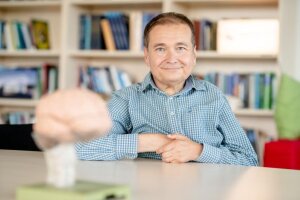
Die Deutsche Zoologische Gesellschaft zeichnet den Biopsychologen der Ruhr-Universität Bochum für seine hervorragenden und originellen Leistungen aus.
Der Bochumer Biopsychologe und Neurowissenschaftler Prof. Dr. Dr. h. c. Onur Güntürkün wird mit dem Wissen-schaftspreis der Deutschen Zoologischen Gesellschaft (DZG) ausgezeichnet. Die DZG würdigt damit seine her-ausragenden Beiträge zum Verständnis der Evolution von Gehirn und Kognition. Die Preisverleihung fand im Rahmen der 118. Jahrestagung der DZG in Münster statt.
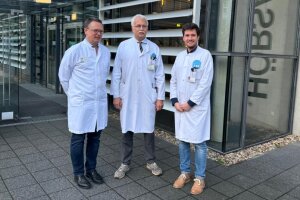
Nach drei Jahren zeigt sich: Positive Effekte der Therapie können langfristig anhalten.
Vor fast drei Jahren sorgten erste Behandlungsergebnisse mit CAR-T-Zellen bei schwer an Myasthenia gravis erkrankten Patient*innen für große Aufmerksamkeit. Einige von ihnen hatten zuvor trotz intensiver Therapien erhebliche Einschränkungen im Alltag. Nach der einmaligen Behandlung mit gentechnisch veränderten körpereigenen Immunzellen verbesserte sich ihr Zustand zum Teil deutlich.
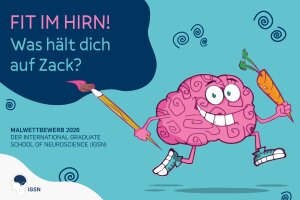
Die International Graduate School of Neuroscience (IGSN) ruft Bochumer Schüler*innen der Klassen 3 und 4 zum Malwettbewerb auf.
Unser Gehirn meistert jeden Tag unendlich viele Aufgaben in rasender Geschwindigkeit. Dabei wiegt es nur so viel wie eine Ananas und verbraucht die gleiche Menge Energie wie eine Glühbirne. Es kann gleichzeitig unzählige Aufgaben ausführen und ist dabei schneller als ein Computer. Wie können wir dem Gehirn helfen, gesund und fit zu bleiben?
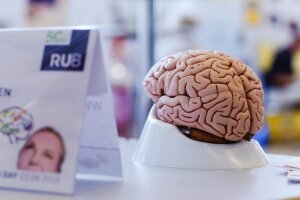
Beim Brain Day am 16. September steht einen Nachmittag lang die Bochumer Neurowissenschaft im Blickpunkt: mit Vorträgen, Informationen und Mitmachaktionen.
Wie aktiviert das Gehirn die körpereigene Apotheke? Sind Krähen so schlau wie Schimpansen? Warum sind soziale Berührungen für die Gesundheit so effektiv? Um solche Fragen geht es einmal im Jahr an der Ruhr-Universität Bochum. Dann lädt die Neurowissenschaft zum Brain Day ins Veranstaltungszentrum ein, um das komplexeste menschliche Organ von ganz neuen Seiten zu präsentieren.
Am 15. Oktober 2026 setzen wir das Format BrainBusiness fort und schaffen erneut einen Raum für den Austausch zwischen Wissenschaft, Versorgung und Wirtschaft.
In diesem Jahr liegt der Fokus auf die Erforschung und Behandlung neurologischer (neuromuskulärer) Erkrankungen und den Grundlagen für Therapien von psychsomatischen Beschwerden und Schmerzen.
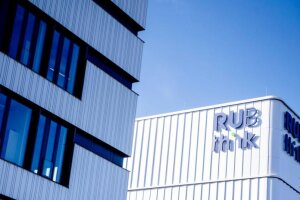
The high-performance computing cluster at Ruhr University is being expanded. The additional computing power will primarily serve cognitive and neuroscience research. However, other areas can also benefit from it.
With the research building THINK, the Theoretical and Integrative Cognitive and Neuroscience at Ruhr University Bochum will have a new home in the fall of 2026. Around 2 million euros of the budget will be invested in computing power.

Einblicke in eine faszinierende Welt - darum geht es einmal pro Jahr an der Ruhr-Universität Bochum, wenn die Neurowissenschaftler*innen zum BRAIN DAY ins Veranstaltungszentrum einladen.
Ein Tag im Zeichen der Bochumer Neurowissenschaften mit Vorträgen, Informationen und Mitmachaktionen. Alle Besucher*innen sind eingeladen zu schauen, zu hören, zu fühlen, nachzufragen und mitzumachen. Auch im Jahr 2026 arbeitet das Organisations-Team des BRAIN DAY's wieder daran, für seine Gäste ein spannendes Angebot zusammenzustellen.
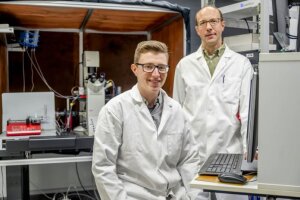
Nerve cells in the brain use chemical messengers for communication. The signals are interpreted by diverse sets of receptor proteins. A new study focusing on a special receptor complex provides some surprising insights.
Researchers at the Chair of Cellular Neurobiology, led by Professor Andreas Reiner, together with their collaboration partners in New York, investigated the function of a specific glutamate receptor complex and made some surprising observations.
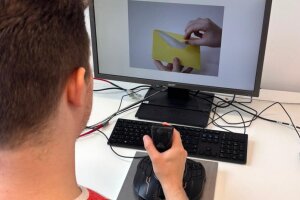
People with problematic Internet use are unconsciously drawn to certain types of online content. These findings could help researchers develop targeted training programs to support people with problematic Internet use.
Games, shopping, social media, pornography: The Internet offers many temptations. While most people use the Internet in moderation, some develop addictive behaviors. A multicenter study with over 1,000 participants found that this automatic and unconscious pull was significantly stronger among individuals with problematic Internet use.
As the closest relative to vertebrates, ascidians are important model organisms. Thanks to modern imaging, researchers now have new insight into their anatomy.
Ascidians, also known as sea squirts, are the evolutionary link between vertebrates and invertebrates, making them valuable subjects of biological studies. For the first time, researchers at RUB, Germany, have detected pronounced autofluorescence in Halocynthia papillosa, one of over 3,000 species.

Copyright © SHN 2025
Last update: 2026/10/02 | 9 pm